With less than a month remaining, the highly anticipated NEFTEGAZ 2025 exhibition is just around the corner! This prominent event, taking place in Moscow, Russia from April 14th to 17th, 2025, continues to solidify its position as one of the largest and most influential trade shows in the global ...
Medium carbon steel, with a carbon content ranging from 0.25% to 0.60%, has poorer weldability than low carbon steel due to its higher carbon content. When the carbon content is around 0.30% and manganese levels are not high, it can still be welded with relative ease. However, as the carbon cont ...
At Haihao Group, we deliver ASME B16.9 standard 90 degree long radius reducing elbows engineered for unmatched performance in complex piping systems. Designed to connect pipes of different diameters while ensuring smooth directional changes, our reducing elbows combine precision dimensions, robu ...
Control valves play a critical role in regulating fluid flow in industrial pipelines. However, various issues such as blockage, leakage, oscillation, and instability can affect their performance. Below are common control valve problems and their solutions.
1.How to Handle Control Valve Blockage? ...
At Haihao Group, we are dedicated to delivering top-quality pipe fittings that meet the highest industry standards. Our ASME B16.11 ASTM A105 3000# 2″ couplings are designed to provide exceptional performance and reliability in various industrial applications.
Product Specifications
Stand ...
At Haihao Group, we specialize in manufacturing high-quality ASME B16.9 standard pipe fittings, including 45° and 90° long radius elbows. Our products are designed to meet the most stringent industry standards, ensuring reliability and performance in various applications.
ASME B16.9 A234 GR WPB ...
In the realm of high-pressure industrial applications, material selection is paramount. For our recent Singapore order, we utilized ASTM A350 GR. LF2 CL1, a material renowned for its exceptional toughness and strength. But what precisely makes this alloy the preferred choice for critical pipe fi ...
The ASME/ANSI B16.9 standard covers overall dimensions, tolerances, ratings, testing, and markings for wrought factory-made butt-welding fittings in sizes NPS ½ through 48 (DN 15 through 1200).At Haihao Group, we take pride in delivering the highest quality pipe fittings that meet the stringent ...
Super Duplex Stainless Steel is a high-performance alloy that offers an excellent combination of strength, corrosion resistance, and durability. It is widely used in industries such as oil and gas, chemical processing, marine engineering, and desalination plants, where materials are exposed to e ...
Haihao Group has participated in the construction of many large-scale ship pipeline systems. Our company is concerned about the news of large ships such as FPSO.On March 3rd, the AGOGO FPSO, the world’s first floating production storage and offloading (FPSO) unit equipped with an offshore ...
In heat treatment, the cooling medium plays a crucial role in determining the microstructure and mechanical properties of pipe fittings. The cooling rate directly affects the hardness, strength, toughness, and risk of deformation or cracking.
1.Mechanism of Cooling Medium Effects
The choice of q ...
Threaded pipe caps are essential components used in a variety of industrial and residential applications. They are designed to seal the open ends of threaded pipes temporarily or permanently, providing a reliable solution for various scenarios. Below are the primary application areas of threaded ...
Penetrant testing (PT) is a widely used non-destructive testing (NDT) method that helps detect surface defects in materials. It operates on the principle of capillary action to identify surface-breaking flaws such as cracks, porosity, and other imperfections. Here’s an overview of how this ...
ASME B16.9 is the standard for factory-made butt-weld pipe fittings, covering a variety of fittings such as elbows, tees, reducers, and caps. Among these, the Y-Shape tee stands out due to its unique shape and functionality within pipeline systems.
What is an ASME B16.9 Y-Shape Tee?
An ASME B16. ...
At Haihao Group, we take pride in catering to the diverse needs of our esteemed clients worldwide. Recently, we were delighted to fulfill an order for ASME B36.10M ASTM A333 Gr. 6 nipples, specifically tailored to the requirements of our valued Russian customers. These nipples, featuring plain e ...
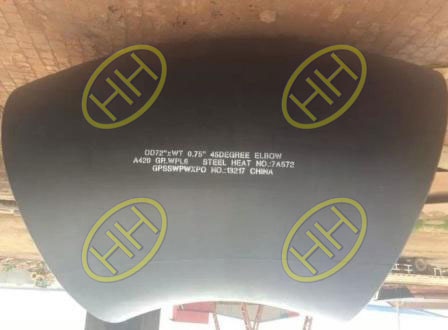
In the ever-evolving landscape of industrial piping systems, the choice of high-quality pipe fittings is paramount to ensuring the reliability, safety, and efficiency of your operations. Haihao Group, a leading name in the industry, is proud to announce the successful supply of ASME B16.9 A420 G ...
Quenching is a heat treatment process used to harden steel and other metals by heating them to a specific temperature and then rapidly cooling them in a quenching medium such as water, brine, oil, or, in some cases, air. This process alters the material’s properties to enhance its hardness ...
Pipe caps are essential components in pipeline systems, used to close the ends of pipes. They come in different designs depending on how they are attached to the pipe. The three most common types are butt welded pipe caps, socket welded pipe caps, and threaded pipe caps. Here is a brief overview ...
Haihao Group has successfully manufactured and delivered a batch of seamless pipe fittings to an Iranian client, meeting strict material and processing requirements. This order includes a variety of ASME B16.9 seamless fittings, specifically:
ASME B16.9 A234 WPB reducing tees
Seamless Equal Tee ...
Stainless steel is widely used in industries such as chemical processing, marine engineering, and power generation due to its excellent corrosion resistance. However, different stainless steel grades have varying levels of resistance to chloride-containing environments, which can cause pitting, ...
As a manufacturer with decades of experience supplying stainless steel fittings and flanges, we’ve seen first-hand how the choice of material can make or break a project in harsh marine environments. One alloy that stands out for demanding offshore and subsea service is A182 F53 duplex stainless ...
As a leading expert in the pipeline system industry for over 40 years, Haihao Group has actively supplied products for numerous offshore pipeline projects. Keeping up with the latest developments in the global offshore industry is essential for us, and we are excited to share recent updates on P ...
Low-temperature steels are generally classified into two major categories based on their crystal lattice structure: ferritic low-temperature steels (body-centered cubic, BCC) and austenitic low-temperature steels (face-centered cubic, FCC).
1.Ferritic Low-Temperature Steels
Ferritic low-temperat ...
Working in the pipeline industry, one quickly learns that ordinary carbon steels are not always up to the task, especially when temperatures drop below freezing. That’s where ASTM A420 WPL6 low-temperature carbon steel becomes essential. At Haihao Group, we manufacture and supply WPL6 fitt ...