Haihao Group is pleased to announce the successful delivery of a reducing tee for our Iranian client. This order was made in accordance with specific industry standards, including ASME B31.4, IPS-D-PI-149, and A860-WPHY60. The reducing tee features a thickness of 0.875 inches and is constructed ...
Stress corrosion cracking (SCC) can lead to catastrophic material failures if not properly managed. To mitigate this issue, the following measures are commonly implemented:
1.Selecting Appropriate Materials
The choice of materials plays a critical role in preventing SCC. Materials should be sele ...
Stress corrosion cracking (SCC) is a form of material degradation that occurs under specific environmental and stress conditions, leading to unexpected failures. Below are the key characteristics of SCC:
1.Caused by Static Tensile Stress
SCC occurs under static tensile stress, often far below th ...
Stress corrosion is a significant phenomenon in the degradation of metals and alloys, often leading to material failure in industrial applications. This article introduces the primary types of stress corrosion, highlighting their characteristics and mechanisms.
1.Pitting Corrosion
Pitting corros ...
When it comes to selecting materials for piping systems, A106 GR.B and A53 GR.B are two of the most commonly used carbon steel grades. Both are widely used in various industries, but they have different chemical compositions and mechanical properties that make them suitable for distinct applicat ...
ASTM standards play a critical role in specifying the manufacturing processes and precise chemical composition requirements for materials used in steel pipes, fittings, and flanges. These standards detail the percentage content of key elements such as carbon, manganese, and nickel, ensuring the ...
ASTM A312 GR TP347 and ASTM A312 GR TP347H are stainless steel grades commonly used in high-temperature and corrosive environments. While they share similar properties, the main difference lies in their carbon content and performance under specific conditions.
ASTM A312 GR TP347 SMLS Pipes
ASTM ...
In the world of piping systems, standards play a critical role in ensuring compatibility, safety, and reliability. Among these, ASME B36.10M and ASME B36.19M are two prominent standards that define the dimensions of pipes for different materials and applications. While both are essential, they c ...
On January 12, China National Offshore Oil Corporation (CNOOC)’s subsidiary, Offshore Oil Engineering Co., Ltd. (referred to as “CNOOC Engineering”), achieved a significant milestone with the successful completion and delivery of 13 topside modules for the 400,000-ton P79 FPSO ...
On January 8th, CIMC Raffles delivered the BOREAS project, the world’s largest and latest generation offshore wind installation vessel, to the Dutch company Van Oord at its Yantai base. This milestone marks a significant leap forward for the global offshore wind industry and highlights Chi ...
At Haihao Group, we understand the importance of providing high-quality, reliable pipeline solutions to industries that demand precision and durability. Recently, we received an order from our Singapore customer for a selection of EN 10253-2 SMLS reducing tees, featuring seamless construction an ...
As a trusted plumbing and pipeline solutions provider, we understand the critical importance of reliable and durable components in maintaining the integrity of industrial pipelines. Our Singapore customer’s recent order for EN 10253-2 P265GH seamless concentric reducers is a prime example ...
At Haihao Group, we take pride in providing high-quality pipeline system components to clients worldwide. A critical part of our quality assurance process is the use of non-destructive testing (NDT), a technology that allows us to ensure the reliability and safety of our products without comprom ...
Socket weld fittings and threaded fittings are two common types of pipe fittings used in piping systems. Both types serve to connect pipes and ensure a reliable flow of fluids or gases, but they differ in design, application, and installation methods. Below is an overview of the key differences ...
Corrosion protection is a crucial aspect of pipeline systems, ensuring durability and safety over time. Among the various anti-corrosion methods, PE (Polyethylene) coating and 3PE (Three-layer Polyethylene) coating are two commonly used technologies. While they share similarities in using polyet ...
As a leading company in the pipeline systems sector, Haihao Group closely monitors the developments in the global FPSO (Floating Production Storage and Offloading) market. The FPSO industry is witnessing significant competition among China, Korea, and Singapore, with each country adopting distin ...
Haihao Group recently fulfilled an urgent order for a Singapore client, producing ASME B16.9 45° short radius elbows made from ASTM A420 WPL6 material, with compliance to the stringent NACE MR0175 standard. These elbows, essential for low-temperature service and corrosion resistance in demanding ...
Ferrite testing plays a vital role in ensuring the performance and safety of austenitic stainless steel components. Haihao Group recently employed the metallographic method, a destructive testing technique, to measure ferrite content in elbows.
Ferrite testing on stainless steel elbow
Overview o ...
As an expert in pipeline systems, Haihao Group has been privileged to participate in numerous large-scale marine pipeline projects. Over the years, we have established strong partnerships with prominent domestic shipyards, including Qidong COSCO Marine Engineering (Qidong COSCO Marine Offshore). ...
Under the Belt and Road Initiative (BRI), Haihao Group has seen significant growth in business partnerships with countries along the route. Our expertise in pipeline systems and commitment to delivering high-quality products have strengthened collaborations with global clients, including our rec ...
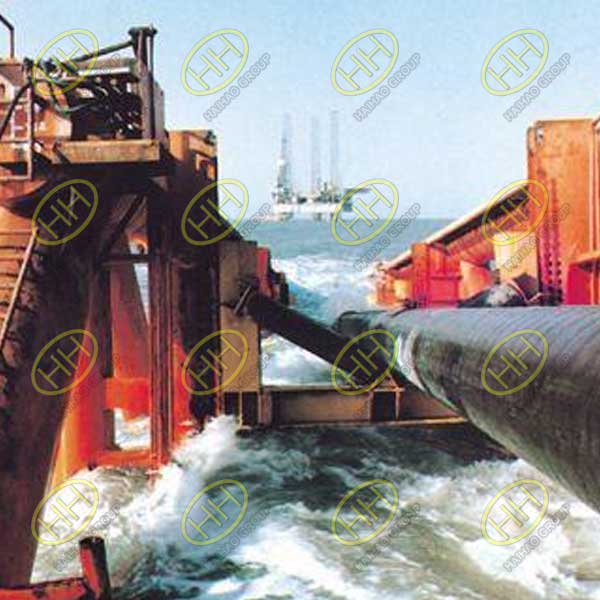
In recent years, Haihao Group has contributed to numerous offshore pipeline projects, including subsea pipelines, large-scale ship pipeline systems, and drilling platform construction. With certifications from major classification societies such as ABS, DNV, and BV, we possess a deep understandi ...
As a specialist in the pipeline systems industry with extensive experience in large-scale marine vessel construction and certifications from leading classification societies such as ABS, DNV, and BV, Haihao Group extends our heartfelt congratulations on the successful launch of China’s fir ...
The offshore oil and gas industry is witnessing a groundbreaking transformation with the advent of all-electric Floating Production Storage and Offloading units (FPSOs). Recent developments, such as Seatrium’s construction of P-84 and P-85 FPSOs and TotalEnergies’ Kaminho project, hi ...
Metal materials exhibit several key mechanical properties, including strength and plasticity, hardness, impact toughness, and fatigue strength. These properties and their testing methods play a vital role in material selection and performance evaluation for mechanical components, ensuring their ...